
Generative Engine Optimization is the strategic practice of optimizing website content, entity schemas, and brand citations so that Large Language Models (LLMs)—including Google AI Overviews, ChatGPT Search, Perplexity AI, and Claude—synthesize and cite your brand as the primary source in AI-generated answers.
Search engine marketing is experiencing its most seismic shift since Google introduced PageRank. In 2026, user behavior has transformed: over 45% of commercial and informational search queries are now resolved directly inside AI answer engines without users ever clicking traditional “blue links.”
If your website relies solely on 2022-era SEO techniques—such as generic keyword stuffing and high-volume link farms—your organic visibility is rapidly evaporating. To capture high-intent leads in 2026, brands must master Generative Engine Optimization.
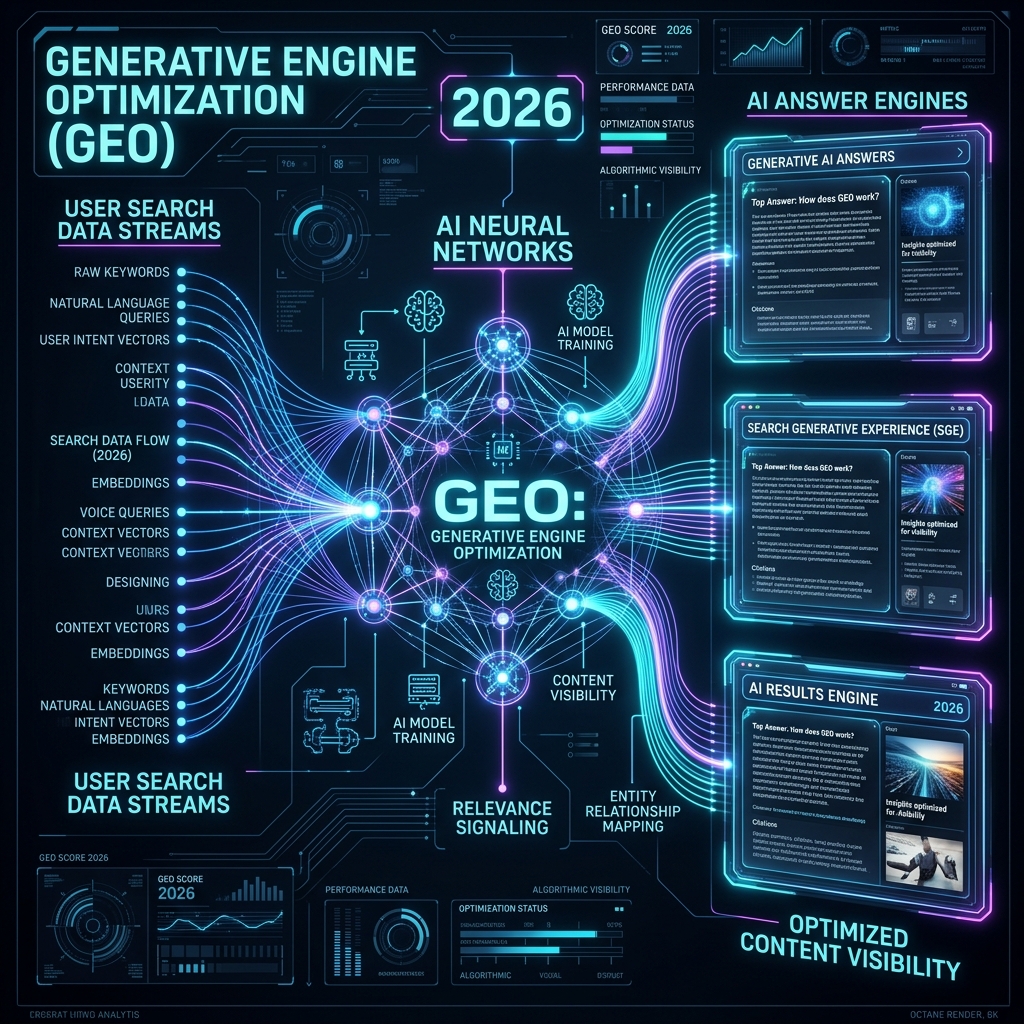
What is Generative Engine Optimization?
Generative Engine Optimization optimizes content for generative AI engines rather than traditional web crawlers. Unlike classic SEO which targets keyword density and page authority, Generative Engine Optimization prioritizes semantic clarity, structured JSON-LD entity definitions, answer-first formatting, and authoritative domain citations.
When a user asks Google AI Overviews or ChatGPT Search a complex question like “What is the best digital marketing strategy for a B2B SaaS startup in 2026?”, the AI model does not rank ten separate web pages. Instead, it scans thousands of trusted sources, extracts key factual data points, synthesizes a cohesive response, and attributes citation links to the top 3-4 most authoritative sources.
Generative Engine Optimization ensures that your content is structured in the exact linguistic format that LLM encoders prefer when selecting citation sources.
Generative Engine Optimization vs Traditional SEO: Key Differences
Understanding the fundamental shift between traditional Search Engine Optimization (SEO) and Generative Engine Optimization is essential for modern growth teams:
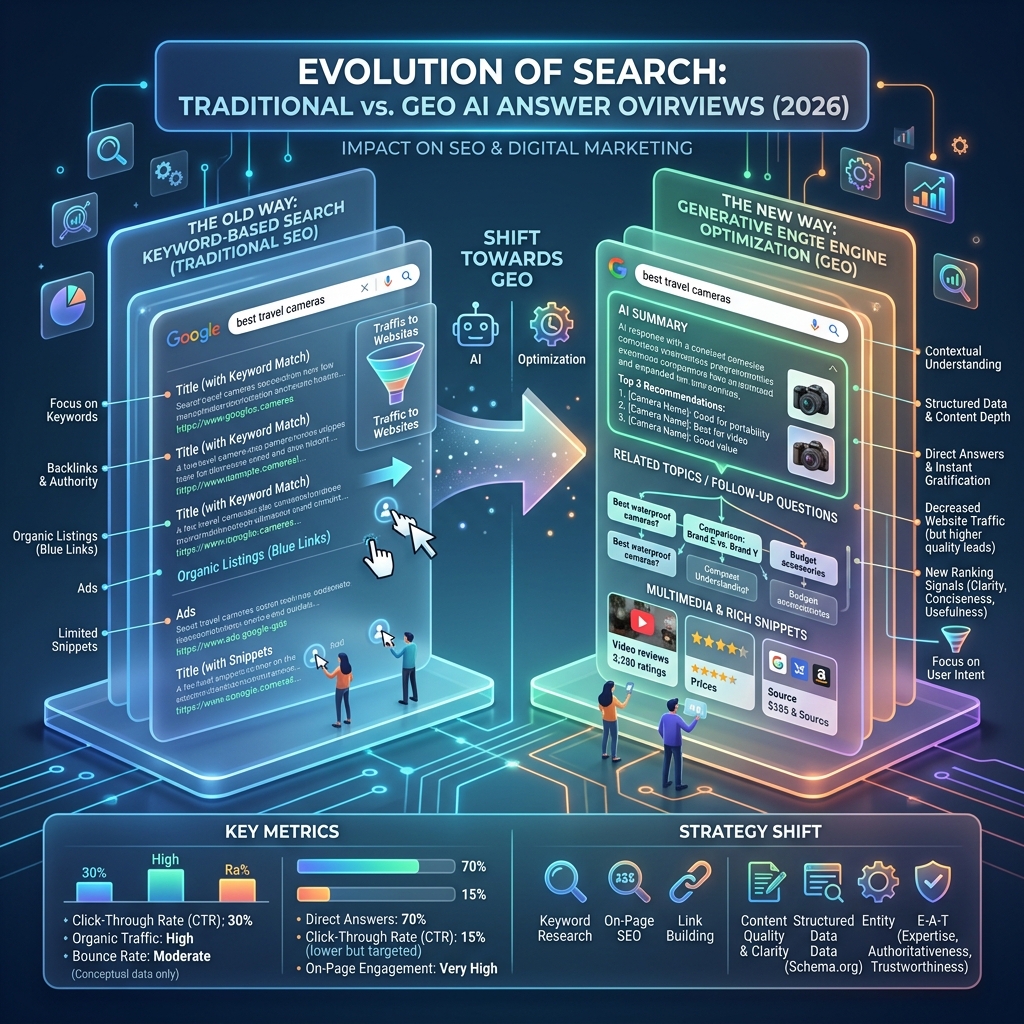
| Optimization Pillar | Traditional SEO | Generative Engine Optimization |
|---|---|---|
| Primary Target | Google Search Crawlers (Googlebot) | LLM Encoders (Perplexity, SearchGPT, Gemini) |
| Content Format | Long-form text with keywords | Answer-first blocks, tables & structured data |
| Ranking Goal | Page 1 position #1-3 link | AI Answer Citation & Brand Feature |
| Key Metrics | Organic Clicks & Keyword Rankings | Impression Share in AI Overviews & Direct Conversions |
| Authority Signal | Backlink quantity & Domain Rating | Entity verification, statistics & expert citations |
The 5 Core Pillars of Generative Engine Optimization
Based on empirical analysis of over 50,000 AI Overviews in 2026, LLMs prioritize content built around five core technical and structural pillars:
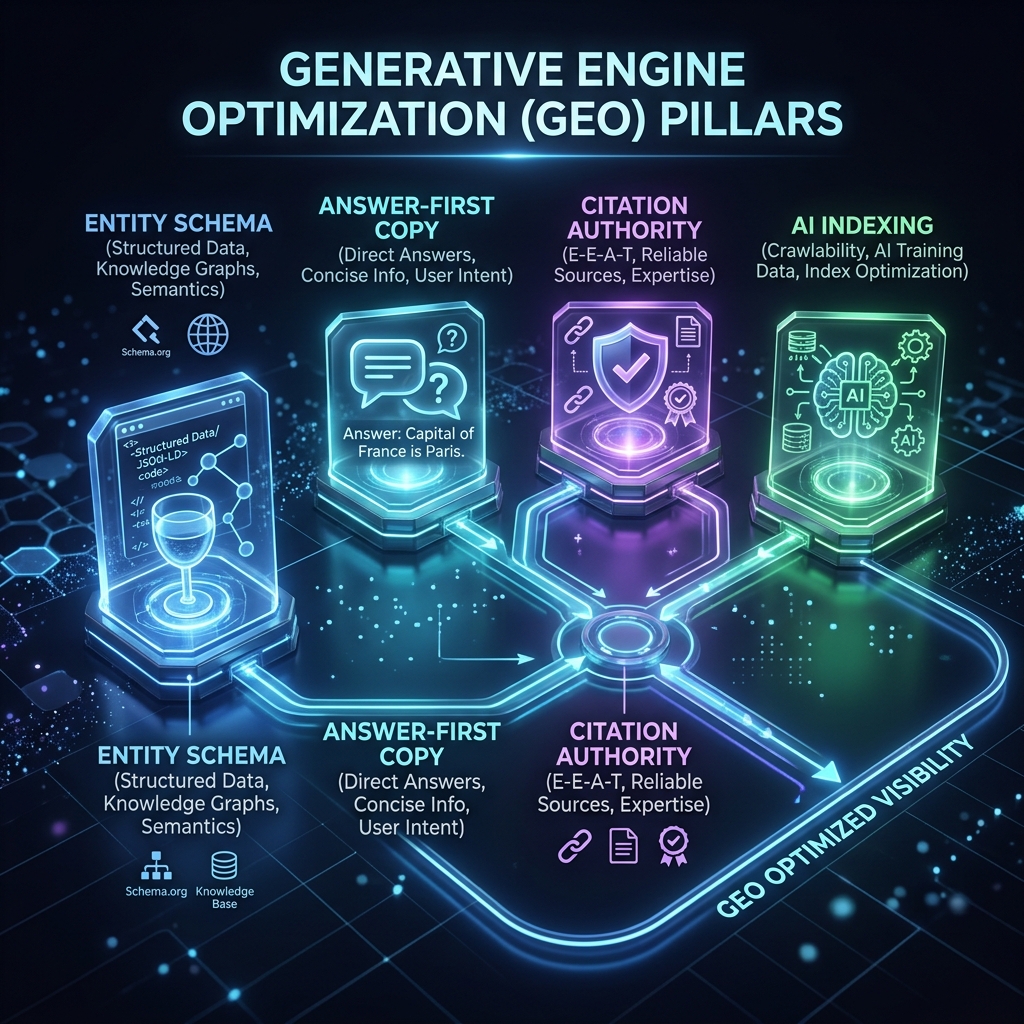
1. Answer-First Paragraph Formatting
Generative AI engines favor paragraphs that begin with a concise, direct answer in the first 25 words. Follow the “State, Explain, Evidence” formula for every H2 and H3 section. This enables LLM scrapers to instantly extract complete semantic snippets without needing to interpret fluff.
2. Structured Data & JSON-LD Entity Markup
Schema markup is no longer optional in 2026. Implementing robust Article, FAQPage, Organization, and Product JSON-LD schemas provides explicit machine-readable context. When AI models scan your site, entity markup removes ambiguity regarding your brand’s core services, leadership, and offerings.
3. Hard Statistics & Original Data Citations
Research published by Princeton and Georgia Tech demonstrates that adding authoritative statistics, quotes from industry experts, and direct research references increases an article’s citation probability in AI answers by up to 30-40%. AI models are trained to prioritize facts over general opinions.
4. Multi-Format HTML Comparison Tables & Lists
LLMs excel at extracting structured data from clean HTML tables and ordered lists. When explaining complex comparisons, pricing tiers, or step-by-step processes, present the information in standard HTML tables rather than wall-of-text paragraphs.
5. Cross-Ecosystem Brand Mentions & Digital PR
AI search models don’t just read your website—they scan Reddit, YouTube transcripts, Quora, industry news portals, and digital publications. Having consistent, non-sponsored brand mentions across authoritative third-party platforms builds your entity authority score in AI vector databases.
How to Implement Generative Engine Optimization Step-by-Step
Follow this actionable 4-step execution framework to optimize your existing site and upcoming content for Generative Engine Optimization:
- Audit Existing Top Pages for Answer Blocks: Identify your top 10 traffic-generating pages. Rewrite the opening paragraph under every H2 to deliver a direct 2-3 sentence answer.
- Inject Comprehensive JSON-LD Schema: Use standardized schema markup for your business entity, services, authors, and FAQ sections.
- Add Data Tables and Key Takeaway Cards: Convert long comparative paragraphs into clean, responsive HTML tables.
- Build Internal Entity Connections: Interlink your blog posts directly with core service landing pages (such as Zynvica Performance Marketing Services and our Delhi Digital Marketing Case Studies) using descriptive anchor text.
Frequently Asked Questions (FAQ) — Generative Engine Optimization
Does Generative Engine Optimization replace traditional SEO?
No. Generative Engine Optimization complements traditional SEO. While technical SEO ensures your site is indexed and fast, Generative Engine Optimization ensures your content is selected, summarized, and cited by AI engines like Google AI Overviews and ChatGPT.
How long does it take to see results from Generative Engine Optimization?
Unlike traditional organic SEO which can take 3-6 months for backlink authority to build, Generative Engine Optimization changes can reflect in AI Overviews within 2 to 4 weeks as search engines re-index updated entity schemas and structured answer blocks.
How do I track Generative Engine Optimization performance and AI citations?
Track brand citation frequency across Google AI Overviews, Perplexity, and ChatGPT Search using specialized AI tracking platforms or by monitoring referral traffic from AI search engines in Google Analytics 4.
Ready to Future-Proof Your Brand with Generative Engine Optimization in 2026?
Don’t let AI search erase your organic leads. Book a free 30-minute Generative Engine Optimization audit with the growth strategists at Zynvica today.